
Recurring conflict is information, not misconduct.
What people don't say doesn't disappear. It shows up on the staffing report.
[what would make this behavior make sense?]
Cultural curiosity is the practice of asking what a behavior means to the person doing it before deciding what to do about it.
Culture isn't only where you're from. It is how directly people communicate, what respect looks like, who can challenge authority, what professionalism sounds like, whether asking for help signals strength or weakness, and how conflict gets handled.
Race and ethnicity can shape those expectations. So can family, generation, geography, religion, profession, class, language, institutions and lived experience. And because these expectations feel normal rather than cultural, they are difficult to see.
This is the reading underneath every engagement for Chiefs of Schools, and the same lens we apply when Chiefs of Schools bring a whole charter network.
4moves in the sequence
Notice, ask, name, decide. The same four steps run a building read and the private work underneath it.
What we do in the room with Chiefs of Schools
An expectation gets inherited, then assumed, then repeated, and then it is simply normal. Curiosity interrupts the pattern.
We write the pattern on the board in one sentence with no adjectives: who does what, how often, and who is in the room when it happens.
Most teams have already named a villain before they have named the behavior.
The question goes to the person doing the behavior, not to the person complaining about it. Staff practice asking it out loud until it stops sounding like an accusation.
The answer is usually a rule someone was raised on and has never been asked about.
We write the unstated expectation next to the behavior, in plain language, and check whether every adult in the room would have guessed it.
An expectation nobody said aloud still gets enforced, usually unevenly.
Each expectation gets a decision, a named owner, and a date. Nothing leaves the room as a shared feeling.
Work without an owner returns to whoever absorbed it last time.
The four moves are indexed by depth: each one goes further under than the one before it.
Notice happens in the Read. Ask and name happen on site. Deciding is what reinforcement keeps in place. The personal version of the sequence is further down this page.
First Step · Understanding
The surface read, and the second read, set at the same scale.
[who taught you that?]
One sentence states what is visible. Beneath the rule sits what was actually going on.
“Three teachers have quit this year.”
Nobody has said out loud who is expected to absorb the extra families.
“The parents are being unreasonable.”
Three of them work nights and the meeting is at four.
“That's just how we do things here.”
Is that culture, or a habit nobody has questioned?
The Softening · the private path for Chiefs of Schools
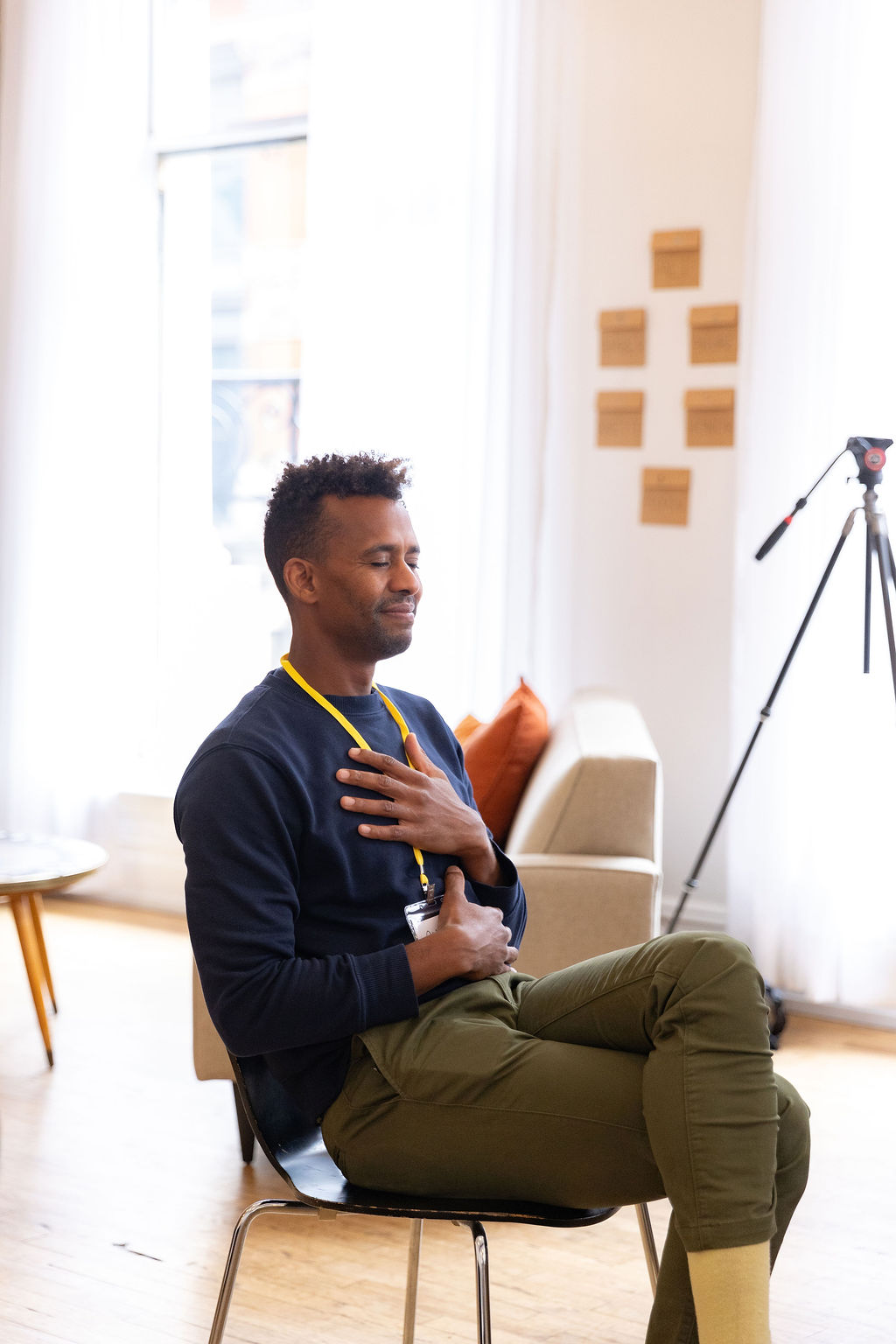
You are leading the room and still somewhere else.
Nobody has asked what it costs a Chief of Schools to hold a system together quietly.
The Softening is private, non-clinical work with Chiefs of Schools who want to lead their people with clarity instead of performing resilience.
The practice
01
Pause
Notice the moment before the reaction arrives.
02
Soften
Let the body come down from the survival setting.
03
Feel
Name what is actually there, without translating it.
04
Ground
Choose the next thing on purpose.
“I didn't have to translate myself to be understood.”
What this is not
Facilitation and private one-to-one work. Not psychotherapy, clinical treatment, or licensed mental-health care. If what you are carrying needs clinical support, Andre will say so and help you find it.
Conversations are treated as confidential, subject to safety and legal obligations.
Ask a question firstSlow down · seeing the full picture
This is the part of the work that cannot be rushed.
Six weeks, minimum, before anything is called normal again.
What we can claim
Solid: observed
- Named testimony from colleagues who worked alongside Andre.
- Participant reports that the sessions widened what culture meant to them.
- Conflict-resiliency programming co-created with a mediation center.